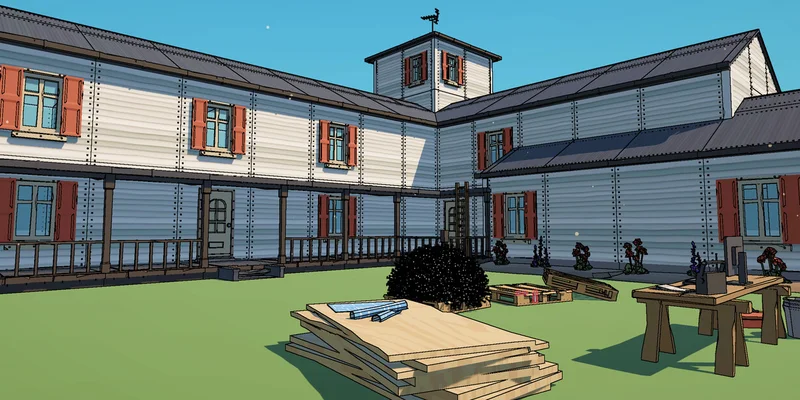
- Primary question: Hammer these nails is it worth it depends on your goals, available time, and tolerance for repetition.
- Best approach: Test the core loop before investing heavily in optional purchases or long sessions.
- Value check: Compare progression speed, variety, polish, and replay value rather than judging the first session alone.
- Decision rule: Keep playing if each session adds a meaningful upgrade, discovery, or challenge.
Hammer these nails is it worth it in 2026?
Hammer these nails is it worth it is best answered by separating short-term curiosity from lasting value. A title can be enjoyable for a few sessions without offering enough variety for long-term play, while a simple concept can remain appealing when its progression loop is clear and satisfying.
The safest evaluation is to focus on what the experience actually gives you. Look at the core activity, the pace of advancement, the amount of repetition, and whether new goals remain available after the opening hours. Avoid treating hype, screenshots, or a low entry cost as proof of quality.
Because reliable details about the title’s current systems, pricing, and update schedule can change, use the framework below as a practical buyer’s checklist rather than assuming unverified features.
| Value Area | What to Examine | Strong Sign | Warning Sign |
|---|---|---|---|
| Core loop | The action repeated during normal play | Satisfying feedback and clear improvement | Repetition feels identical after a short test |
| Progression | Upgrades, unlocks, or milestones | Each session creates visible progress | Rewards feel slow or disconnected |
| Variety | Tools, tasks, areas, challenges, or modes | New situations change your approach | One solution works for nearly everything |
| Replay value | Reasons to return after initial completion | Multiple goals or evolving challenges | Progress ends quickly without meaningful alternatives |
| Accessibility | Controls, pacing, and learning curve | Easy to understand, difficult to master | Confusing systems obscure the main objective |
A good value judgment should also account for your personal play style. Players who enjoy focused, repetitive tasks may find a compact loop more rewarding than players who need constant novelty. Neither preference is wrong; the key is matching the title to the experience you want.
Give the core loop enough time to reveal its progression, but stop when repetition continues without new decisions, goals, or rewards.
Good Fit for Focused Players
- Enjoys short, repeatable objectives
- Likes visible incremental progress
- Prefers learning one system deeply
Good Fit for Completionists
- Wants milestones to track
- Enjoys optimizing routes or actions
- Values long-term objectives
Possible Poor Fit
- Needs constant story development
- Dislikes repeated actions
- Expects a large amount of confirmed content
Core gameplay value and progression
The strongest indicator of value is whether the central action remains satisfying after the novelty fades. In a task-focused title, small details matter: responsive controls, clear feedback, understandable rewards, and a steady sense that your decisions improve the next attempt.
Progression should also create choices rather than simply increasing numbers. A useful upgrade changes how you approach a task, saves time, opens a new route, or lets you pursue a different objective. If every improvement produces the same result, the system may feel functional but not especially deep.
Use the following comparison while testing the title:
| Progression Type | What It Adds | How to Judge It |
|---|---|---|
| Efficiency upgrades | Faster completion or reduced effort | Valuable when faster play still requires attention |
| New tools or actions | More ways to solve objectives | Strong when each option has a clear purpose |
| Cosmetic rewards | Personalization and collection goals | Worthwhile for players who enjoy customization |
| Challenge milestones | Optional tests of mastery | Strong when challenges change your strategy |
| Area or task unlocks | Fresh content or environments | Valuable when new areas introduce different demands |
A progression system does not need to be enormous to be worthwhile. It needs to communicate purpose. When you know what you are working toward and why it matters, even a modest number of unlocks can support a satisfying session structure.
How to test the loop
Follow these steps before making a final decision:
Identify the repeated action
Write down what you do most often. If the activity is not enjoyable on its own, progression may not be enough to sustain interest.
Check the first meaningful upgrade
Determine whether an early improvement changes your approach or only raises a statistic. Functional changes usually provide stronger value than passive increases.
Compare the next objective
Look at the next milestone and ask whether it introduces a new decision, challenge, or reward. A clear objective helps maintain momentum.
Test one repeat session
Play the same general activity again after unlocking something. Notice whether the new option makes the loop more engaging or simply longer.
Make a time-based decision
Continue if you are curious about the next goal. Step away if you are completing tasks only because you already invested time.
Time already spent is not proof that a title deserves more of your time. Judge the next session by its expected enjoyment, not by past investment.
Effort, repetition, and long-term appeal
A title can be worth trying while still being a poor long-term fit. The difference usually comes down to repetition. Repeating a familiar task is satisfying when you are refining a technique, chasing a milestone, or experimenting with a new option. It becomes tiring when the outcome, strategy, and reward remain unchanged.
Consider the balance between effort and payoff:
| Player Priority | What Makes the Experience Worthwhile | What Reduces Value |
|---|---|---|
| Short sessions | Quick objectives and reliable stopping points | Progress requires long uninterrupted sessions |
| Mastery | Precision, timing, or meaningful optimization | Success depends mainly on waiting or repetition |
| Collection | Clear rewards and trackable targets | Rewards are difficult to identify or compare |
| Exploration | New locations, tasks, or discoveries | The environment offers little change |
| Relaxation | Predictable pacing and low pressure | Excessive friction interrupts the flow |
The title may be a good choice if you enjoy a compact routine and appreciate gradual improvement. It may be less suitable if you expect constant surprises, a large narrative, or a broad selection of systems.
Replayability should be judged by meaningful variation. A larger content count is not automatically better if every activity plays the same way. Conversely, a smaller experience can support repeat play when it encourages different strategies or gives you optional mastery goals.
Practical value tiers
| Rating | Meaning | Recommended Action |
|---|---|---|
| Excellent value | The loop is satisfying, progression is clear, and replay goals remain | Invest time confidently |
| Good value | Enjoyable core with some repetition or limited variety | Continue if the price and time fit |
| Situational value | Appeals strongly to a specific play style | Try it before committing |
| Weak value | Progression does not improve the experience enough | Wait for changes or choose another title |
The best sign is not unlimited content. It is a steady stream of meaningful decisions that makes you curious about the next session.
Session Value
A good session should produce enjoyment, progress, discovery, or mastery.
Time Value
The experience should respect both short visits and longer play periods.
Choice Value
New options should create different approaches instead of extra chores.
Return Value
You should have a clear reason to come back beyond habit.
Who should try Hammer these nails?
Hammer these nails may be worth trying if you enjoy focused gameplay, gradual improvement, and repeatable objectives. It is a stronger recommendation for players who like seeing small gains accumulate over time rather than needing a large story or frequent system changes.
It is a weaker recommendation for players who want a broad, confirmed content package from the beginning. If your main priority is extensive variety, multiplayer depth, or a detailed narrative, verify those features through the title’s official listing before committing.
Use this checklist during your first sessions:
Value Check:
- The core action remains enjoyable after repeated attempts
- Progression changes how tasks are approached
- The next milestone is clear and motivating
- Rewards feel connected to the effort required
- The title matches your preferred session length
Quick decision table
| Your Situation | Verdict | Why |
|---|---|---|
| You enjoy compact, repeatable gameplay | Try it | The focused loop may be the main appeal |
| You want visible progression | Try it if upgrades feel meaningful | Progress must improve more than the numbers |
| You dislike repetition | Be cautious | The core activity may become familiar quickly |
| You need a large amount of variety | Verify first | Do not assume unconfirmed modes or systems |
| You are undecided about long-term play | Test before investing | Early hands-on experience is the most useful signal |
Check the current official store description, supported platform information, and refund terms on November 9, 2026 before making a purchase decision. Availability and pricing can change.
Final verdict and FAQ
The answer to Hammer these nails is it worth it depends less on a universal score and more on whether its central loop matches your expectations. Players who enjoy repetition with purpose, visible improvement, and focused objectives may find strong personal value. Players seeking constant novelty should test the experience carefully before committing significant time or money.
The most reliable method is simple: learn the core action, check whether progression changes your options, and evaluate how you feel after repeating the loop. If the next goal creates genuine curiosity, continue. If you are playing only to justify earlier effort, move on without guilt.
| Final Question | Positive Answer | Negative Answer |
|---|---|---|
| Is the main action fun? | You enjoy the process itself | You only care about the next reward |
| Does progression matter? | Unlocks change your choices | Rewards mainly add numbers |
| Is repetition acceptable? | Repeated tasks support mastery | Each attempt feels identical |
| Is the time investment fair? | Sessions produce clear value | Progress feels slower than the enjoyment |
| Does it fit your taste? | Its pace matches your habits | It conflicts with your preferred genre or style |
Q: Is Hammer these nails worth trying for new players?
It can be worth trying if you enjoy focused objectives, gradual progression, and repeatable activities. Test the core loop before making a long-term commitment.
Q: How can I tell whether the progression is meaningful?
Check whether upgrades, tools, or milestones change your decisions. Progression has stronger value when it creates new approaches instead of only increasing statistics.
Q: Is Hammer these nails good for short sessions?
Use the title's objective structure and stopping points as your guide. If a session can produce a clear task, reward, or milestone without excessive setup, it may suit short play periods.
Q: Should I keep playing if the game feels repetitive?
Continue only when repetition supports mastery, collection, or a meaningful goal. If the activity remains unchanged and curiosity has disappeared, your time may be better spent elsewhere.
Try the core experience, measure meaningful progress, and choose based on your own enjoyment rather than an assumed universal verdict.